- Collections
Digital Collection









New Releases
- Calendar
- Programs
- News
- Research
- Search Catalog

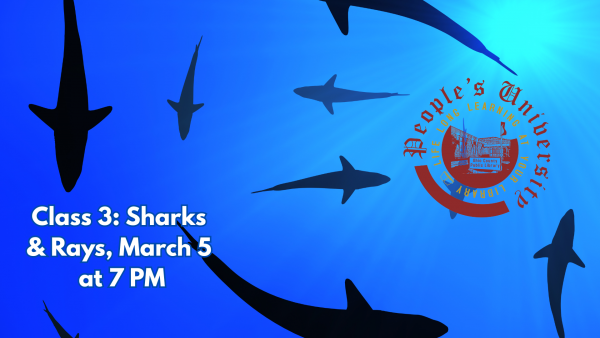
If you ask people to name a typical shark, the answer is usually an iconic species like a White, Tiger, or Bull Shark. These, however, are decidedly not typical sharks. Nearly 2/3 of the more than 500 species of living sharks are no larger than 1 m (3.3 ft) and, what’s more, over half of the species live deeper than 200 m (660 ft). A typical shark is not large, gray, fast-swimming, and found along coastline, but rather is small, brown, and lives in the deep ocean. And there even more kinds of rays than there are sharks, and some even live in rivers and lakes! In addition to myths, I will take you on a brief excursion into the world of these magnificent beasts, including recent scientific advances that will feed your fascination, calm any fears you might harbor (e.g., sharks are no more eating machines than a turtle is, and some have very specific, even picky diets) and explain why sharks and rays are critical to ocean health.
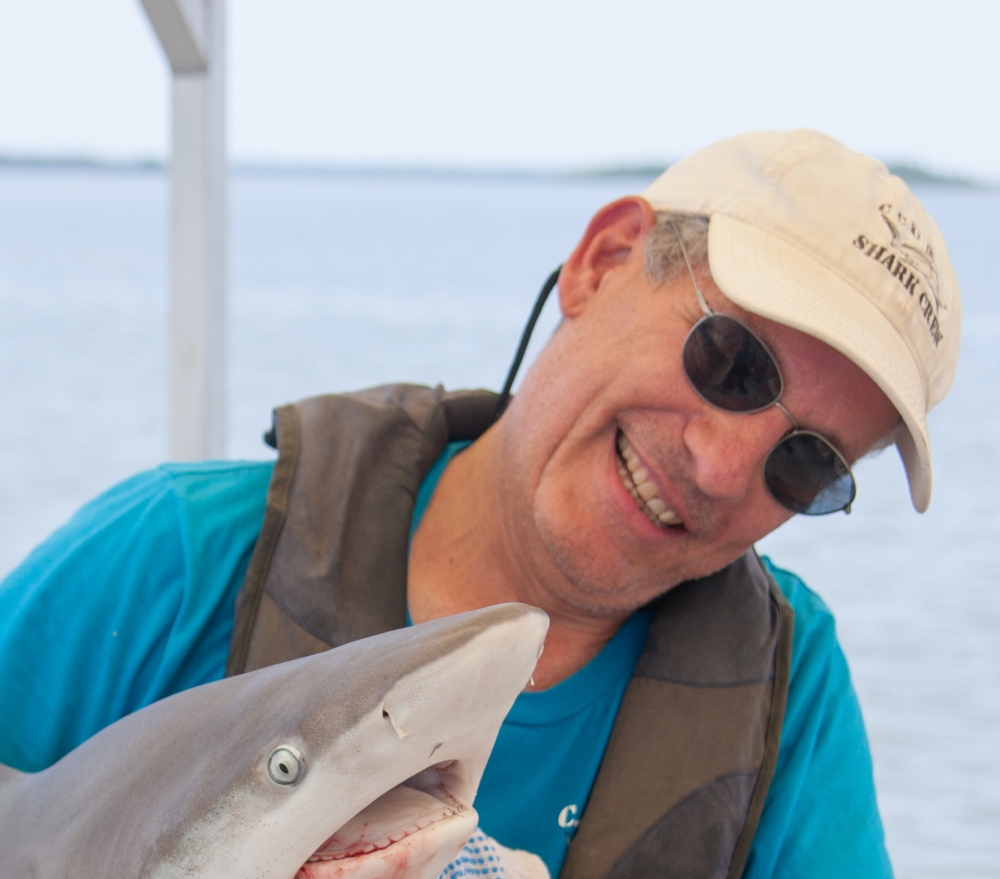 Instructor Dr. Daniel C. Abel is Distinguished Professor Emeritus of Marine Science at Coastal Carolina University in Conway, SC. He earned his M.Sc. in marine biology from the College of Charleston and his Ph.D. in marine biology from the University of California San Diego’s Scripps Institution of Oceanography. He was a postdoctoral fellow in marine biomedicine at the Medical University of South Carolina. His research focuses on the physiology and ecology of sharks and rays. In addition to numerous scientific papers, he is author/co-author of the books Environmental Issues (4th ed, Pearson.), Environmental Oceanography (Jones and Bartlett), Environmental Geology (Jones and Bartlett), Shark Biology and Conservation (Johns Hopkins), Tooth and Claw: Top Predators of the World (Princeton), The Lives of Sharks (Princeton), Sharkpedia (Princeton), Shark: The Illustrated Biography (2025, Princeton), and the forthcoming Biology of the Skates and Rays (Princeton). His books have been translated into German, Chinese, and Japanese. He has been an award-winning environmental columnist and was also founding director of Coastal Carolina University’s Campus and Community Sustainability Initiative from 2006 – 2012. Dr. Abel taught at sea and in more than 30 countries on the M/V Explorer with Semester at Sea in spring 2010 and summer 2012, 2013, and 2014, and his annual Biology of Sharks course held at the Bimini Biological Field Station in The Bahamas has run for nearly thirty years. Dr. Abel was a Senior Fellow of the U.S. Partnership for Education for Sustainable Development, and was the inaugural Honors Distinguished Faculty Fellow at Coastal Carolina University. He has appeared on CNN, CBC, CBS, NBC, The Weather Channel, and five National Geographic documentaries. He is a native South Carolinian.
52 16th Street
Wheeling WV 26003
Phone: 304-232-0244
Online Catalog
Map & Directions
E-mail Us
Follow us on Social Media:
OCPL appreciates the generosity of patrons in donating books, historical materials, and other library materials. Due to the number of items donated, limited staff, and limited space to house materials, the OCPL must restrict the donations accepted. We welcome donations and encourage reading our Donation Policies before donating:
Book Donations Historical Materials Donations
Partners:

© Copyright 2026 Ohio County Public Library. All Rights Reserved. Website design by TSG. Powered by SmartSite.biz.