- Collections
Digital Collection









New Releases
- Calendar
- Programs
- News
- Research
- Search Catalog

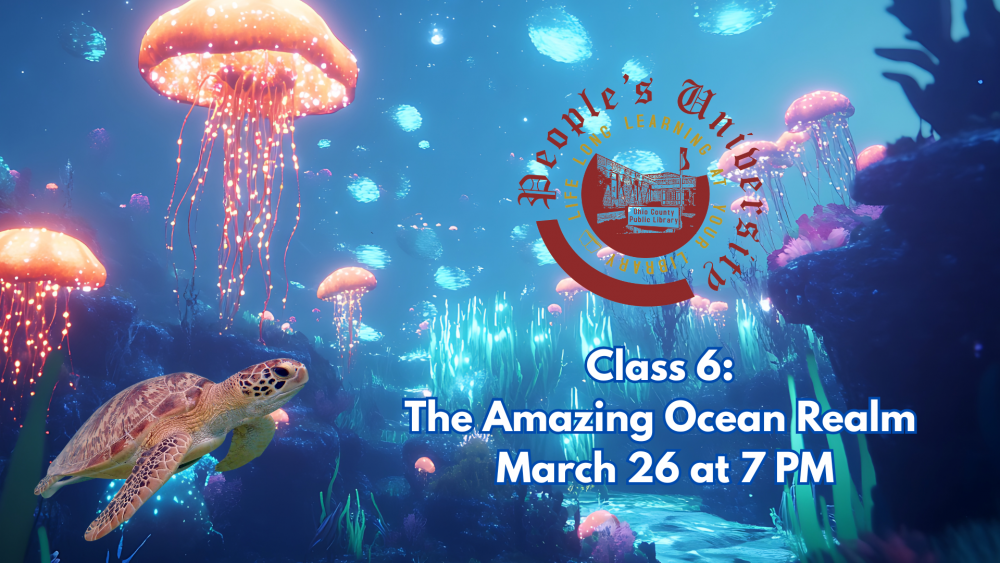
Live and in-person! Instructors Dick Smosna and Kathy Bruner—husband and wife, geologists, and teachers—have taught for over 30 years at West Virginia University, offering courses in oceanography, marine geology, and marine biology.
Event link: https://www.facebook.com/share/18VmDqWvih/
Although appearing to us foreign and dangerous, the ocean is really a great place to live. Especially the upper 600 feet of the ocean (the sunlit photic zone) which is home to 90% of all marine life. Food for many animals is all around—they simply open their mouth to feed. Essential nutrients pass easily into the body through the skin. Buoyancy supports one’s body, making a heavy skeleton unnecessary. The water temperature varies little; no need for a system of thermoregulation. Marine organisms have no air-filled spaces in their body (sinuses, inner ear); hence they don’t suffer as do humans from “the squeeze” of high water pressure. Below 600 feet, however, the ocean is a different world. There is little or no light in this vast environment, the largest habitat on Earth. Animals may bring their own lights (bioluminescence) or have huge, light-sensitive eyes. There are no plants which elsewhere constitute the base of the food chain. Food is therefore hard to find: a dead whale’s carcass falling to the ocean floor would provide a deep-sea feast. Finding a mate can be tough, and many fish resort to sexual parasitism. Finally, the eternally cold temperature slows metabolism, limiting high-speed activities and delaying maturation. Surprisingly, life on Earth may have originated 3 billion years ago in this deep zone of perpetual darkness, extreme pressure, and scarce food.
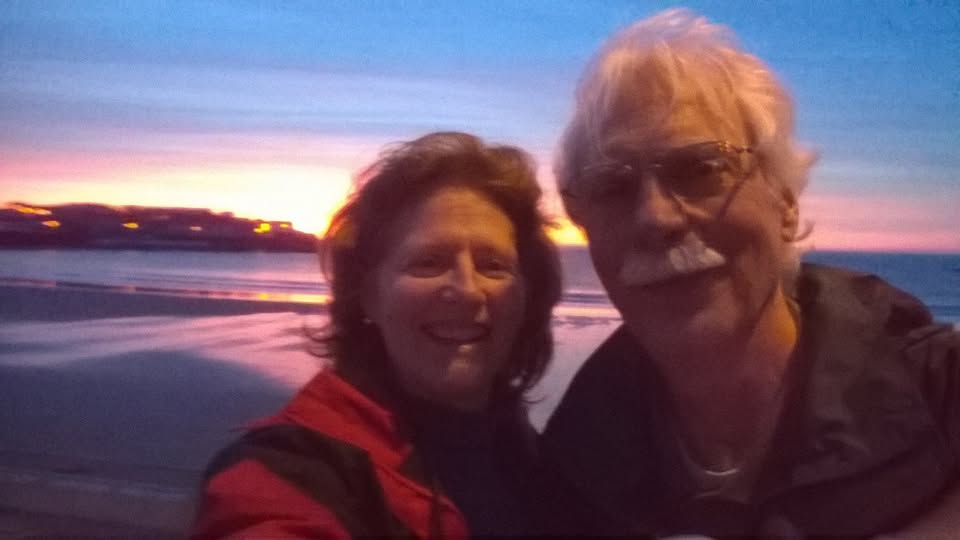 Instructors Dick Smosna and Kathy Bruner—husband and wife, geologists, and teachers—have taught for over 30 years at West Virginia University, offering courses in oceanography, marine geology, and marine biology. Since retiring, they have held a part-time faculty position at the University College Cork in Ireland (tough job, but someone has to do it). Dick received his PhD degree from the University of Illinois sometime in the Jurassic Period. Before joining WVU, he worked as an environmental geologist with the West Virginia Geological Survey. He now teaches regularly at WVU’s Lifelong-Learning Institute. Kathy received her PhD from WVU, and she worked for many years as a consulting petroleum geologist for industry and at the U.S. Department of Energy’s Research Lab in Morgantown. She has two horses that she rides regularly and two cats that she pets daily.
52 16th Street
Wheeling WV 26003
Phone: 304-232-0244
Online Catalog
Map & Directions
E-mail Us
Follow us on Social Media:
OCPL appreciates the generosity of patrons in donating books, historical materials, and other library materials. Due to the number of items donated, limited staff, and limited space to house materials, the OCPL must restrict the donations accepted. We welcome donations and encourage reading our Donation Policies before donating:
Book Donations Historical Materials Donations
Partners:
© Copyright 2026 Ohio County Public Library. All Rights Reserved. Website design by TSG. Powered by SmartSite.biz.