- Collections
Digital Collection









New Releases
- Calendar
- Programs
- News
- Research
- Search Catalog

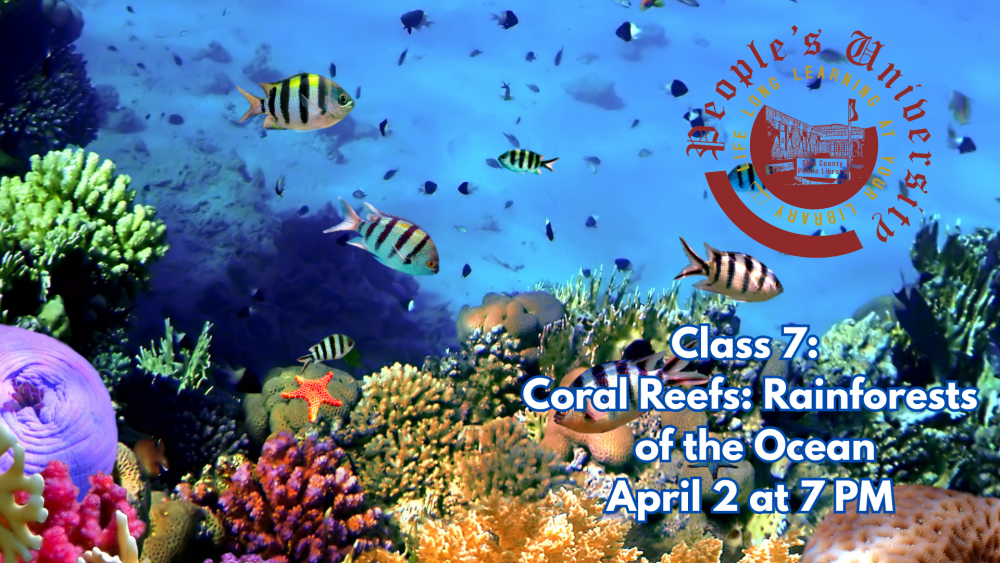
Corals are very small creatures that build gigantic reefal structures visible from space. Teeming with life, reef habitats support a quarter of all marine species. Though often mistaken for plants, the coral animal itself is not much more than digestive and reproductive systems, protected by a hard exoskeleton of calcium carbonate. Photosynthesizing algae that live in their tissue provide food resources (sugars, fats), though corals also feed by catching even smaller prey with stinging tentacles. They reproduce asexually by budding, rapidly leading to massive colonies of genetically identical individuals. In addition, they reproduce sexually by broadcast spawning, which produces new colonies of genetically unique individuals. The high biodiversity around reefs, likening them to terrestrial rainforests, develops because the corals play a number of vital roles in the ecosystem. Some critters eat corals. Triggerfish, for example, have incredibly strong jaws and chisel-like teeth to bite through the hard exoskeleton. The coral exoskeleton offers a firm substrate for the attachment of other sessile (fixed-in-place) organisms, like sponges, tube worms, and calcareous algae. The reef structure also contains numerous sheltered niches in which marine organisms can hide. Both predators and prey—such as camouflaged stonefish, master-of-disguise octopuses, burrowing garden eels, and tiny shrimp, crabs, and nudibranchs—conceal themselves in the nooks and crannies around the coral colonies. Finally, the reef community as a whole provides food for apex predators, sharks and other large fish.
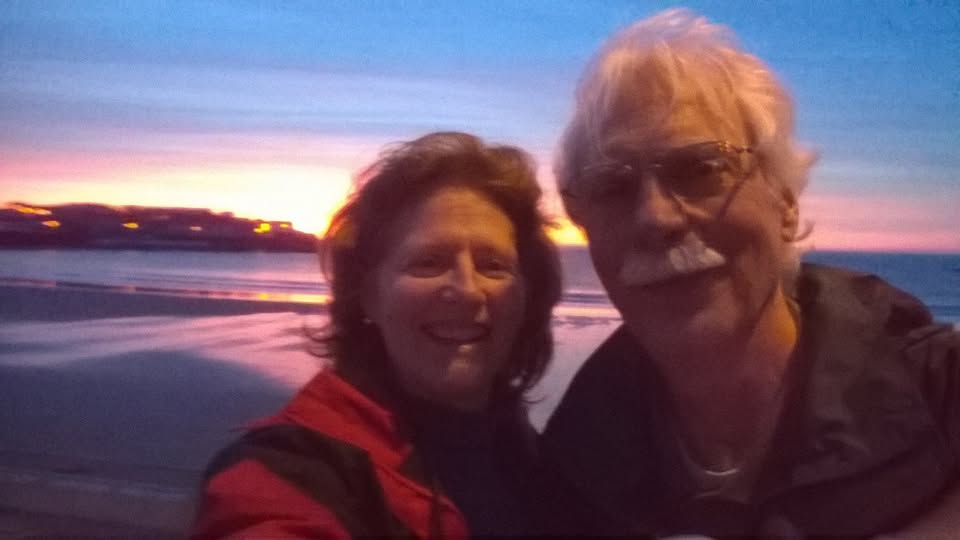 Instructors Dick Smosna and Kathy Bruner—husband and wife, geologists, and teachers—have taught for over 30 years at West Virginia University, offering courses in oceanography, marine geology, and marine biology. Since retiring, they have held a part-time faculty position at the University College Cork in Ireland (tough job, but someone has to do it). Dick received his PhD degree from the University of Illinois sometime in the Jurassic Period. Before joining WVU, he worked as an environmental geologist with the West Virginia Geological Survey. He now teaches regularly at WVU’s Lifelong-Learning Institute. Kathy received her PhD from WVU, and she worked for many years as a consulting petroleum geologist for industry and at the U.S. Department of Energy’s Research Lab in Morgantown. She has two horses that she rides regularly and two cats that she pets daily.
52 16th Street
Wheeling WV 26003
Phone: 304-232-0244
Online Catalog
Map & Directions
E-mail Us
Follow us on Social Media:
OCPL appreciates the generosity of patrons in donating books, historical materials, and other library materials. Due to the number of items donated, limited staff, and limited space to house materials, the OCPL must restrict the donations accepted. We welcome donations and encourage reading our Donation Policies before donating:
Book Donations Historical Materials Donations
Partners:


© Copyright 2026 Ohio County Public Library. All Rights Reserved. Website design by TSG. Powered by SmartSite.biz.